






 ES
ES  EN
EN  PT
PT  FR
FR  RU
RU 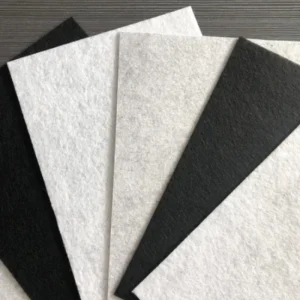
Resumen
Nonwoven fabrics are a class of engineered textiles produced by bonding or interlocking fibers through mechanical, thermal, or chemical processes, bypassing traditional weaving or knitting. This manufacturing distinction allows for a vast spectrum of material properties, from high tensile strength and durability to exceptional filtration and absorbency. An examination of their applications reveals a significant presence in civil engineering and industrial sectors. For instance, needle-punched geotextiles serve critical functions in soil stabilization, drainage, and erosion control, forming the unseen foundation of roads and retaining walls. Similarly, impermeable geomembranes are fundamental in environmental containment systems, such as landfill liners and water reservoirs, preventing contamination. Other prominent examples include high-efficiency filtration media for automotive and industrial use, structural components in furniture and automotive interiors, and specialized materials in agriculture and horticulture. These examples demonstrate the material's adaptability and its integral role in modern engineering, environmental protection, and manufacturing.
Principales conclusiones
- Nonwovens are engineered by bonding fibers, not weaving or knitting.
- Geotextiles are a prime example, used for soil stabilization and drainage.
- Geomembranes provide impermeable barriers for waste and water containment.
- Filtration media in automotive and HVAC systems rely on nonwoven structures.
- Investigate what is an example of nonwoven fabric to see its diverse roles.
- They provide hidden structural support in furniture and automotive interiors.
- Agricultural fabrics use nonwovens for weed control and crop protection.
Índice
- Unpacking the Concept: What is a Nonwoven Fabric?
- Example 1: Geotextiles – The Unseen Foundation of Modern Infrastructure
- Example 2: Geomembranes – Impermeable Barriers for Environmental Protection
- Example 3: Advanced Filtration Media – Guardians of Clean Air and Water
- Example 4: Automotive Interiors – Engineering Comfort and Durability
- Example 5: Home Furnishings and Upholstery – The Hidden Structure
- Example 6: Agricultural and Horticultural Fabrics – Cultivating Success
- Example 7: Disposable Hygiene and Medical Products – A Sanitary Revolution
- The Future of Engineered Materials: Innovations and Trends
- Preguntas más frecuentes (FAQ)
- Conclusión
- Referencias
Unpacking the Concept: What is a Nonwoven Fabric?
To approach the question, "what is an example of nonwoven fabric," we must first step back and consider the very definition of fabric itself. In our collective imagination, fabric is born on a loom, a meticulous interlacing of warp and weft threads, or perhaps from the looping dance of knitting needles. These processes have defined textiles for millennia. Nonwoven materials, however, represent a radical departure from these traditions. They are not defined by an orderly, repeating geometry of yarns but by the collective cohesion of individual fibers.
Imagine a pile of loose cotton fibers. How might you transform that fluffy mass into a coherent sheet without spinning it into yarn first? You could press it, heat it, spray it with an adhesive, or use a method that mechanically tangles the fibers together. In essence, these are the foundational principles behind nonwoven fabric production. A nonwoven is a sheet or web structure bonded together by entangling fiber or filaments, or by thermal or chemical means. The individual fibers are the building blocks, and the process creates a unified fabric directly from them.
Beyond Weaving and Knitting: A Foundational Understanding
The distinction between woven and nonwoven fabrics carries profound implications for their properties and applications. Woven fabrics, with their grid-like structure, tend to have high tensile strength along the axis of their yarns but can be prone to fraying at the edges. Their structure is predictable and uniform.
Nonwoven fabrics, by contrast, often have a more random fiber orientation. This randomness can impart properties that are more uniform across all directions of the sheet. They can be engineered to be incredibly absorbent, highly porous for filtration, or completely impermeable. Their production is typically faster and more cost-effective than weaving or knitting because it eliminates the yarn-formation step. A nonwoven fabric is, at its core, a testament to material science, an engineered solution designed to meet a specific performance requirement rather than a specific aesthetic tradition. The field is vast, with ongoing developments pushing the boundaries of what is possible, as explored in discussions on the nonwoven fabrics market in 2025.
The Core Principle: From Fibers to Fabric
The journey from raw polymer or natural fiber to a finished nonwoven product involves two primary stages: web formation and web bonding.
First, a web of fibers must be created. For staple fibers (short, finite-length fibers like cotton or chopped polyester), they can be carded—a process that uses wire-covered rollers to comb and align the fibers into a uniform web. Alternatively, an air-laid process uses streams of air to disperse the fibers randomly onto a moving screen, creating a web with excellent bulk and isotropy (uniform properties in all directions). For filament fibers (continuous strands extruded from a polymer), the process is even more direct. In spunbonding, molten polymer is extruded through a spinneret to form continuous filaments, which are then laid down on a conveyor belt to form the web.
Second, this loose web must be bonded to give it strength and integrity. Bonding is where much of the material's final character is determined. Mechanical bonding, like needle-punching, uses barbed needles to physically entangle the fibers. Thermal bonding uses heat to melt and fuse thermoplastic fibers at their crossover points. Chemical bonding involves applying an adhesive binder that glues the fibers together.
Key Manufacturing Processes: A Comparative Overview
To better grasp the variety within the nonwoven world, let's compare three of the most common manufacturing methods. Each method yields a fabric with a distinct set of characteristics, making it suitable for different applications.
| Característica | Spunbond | Meltblown | Needle Punch |
|---|---|---|---|
| Fiber Type | Continuous filaments | Microfibers | Staple fibers |
| Bonding Method | Primarily thermal | Self-bonding via hot air | Mechanical (entanglement) |
| Key Properties | High strength-to-weight ratio, durability, dimensional stability. | Excellent filtration efficiency, fine pore size, poor strength. | Felt-like texture, high porosity, good resilience, excellent drainage. |
| Common Uses | Geotextiles, hygiene product coverstock, carpet backing. | Filtration media (masks, HVAC), sorbents, battery separators. | Geotextiles, automotive carpets, furniture padding, blankets. |
Understanding these fundamental differences is the key to appreciating why a specific type of nonwoven is chosen for a particular job. A spunbond fabric's strength makes it ideal for a geotextile, while a meltblown fabric's microscopic fibers are perfect for capturing airborne particles in a surgical mask. A needle-punched fabric's bulk and resilience lend themselves perfectly to padding and insulation.
Example 1: Geotextiles – The Unseen Foundation of Modern Infrastructure
When we drive on a paved road, walk across a landscaped retaining wall, or benefit from a flood-control levee, we are interacting with an invisible network of engineered materials working tirelessly beneath the surface. Among the most important of these are geotextiles, a premier example of nonwoven fabric in action. Geotextiles are permeable fabrics which, when used in association with soil, have the ability to separate, filter, reinforce, protect, or drain (Koerner, 2012). Their development has revolutionized civil engineering, offering solutions that increase the lifespan, performance, and economic viability of countless projects.
The Role of Geotextiles in Soil Stabilization and Separation
Think about building a road over soft, weak soil. Traditionally, engineers would have to excavate large amounts of the poor soil and replace it with tons of expensive, high-quality aggregate (gravel and crushed stone). A nonwoven geotextile offers a more elegant solution.
When a layer of geotextile is placed between the soft subgrade soil and the aggregate base course, it performs two functions simultaneously. First, it acts as a separator. Without the geotextile, the heavy aggregate would be pushed down into the soft soil under the pressure of traffic, and the fine soil particles would migrate up into the aggregate layer. This mixing contaminates the aggregate, reduces its load-bearing capacity, and leads to premature road failure, such as rutting and potholes. The geotextile fabric prevents this intermixing, maintaining the integrity of both layers.
Second, the geotextile provides stabilization. By spreading the load from the wheels over a wider area, it reduces the stress on the weak subgrade soil. The fabric's tensile strength helps to confine the aggregate, creating a more stable and robust road structure. This allows for a thinner aggregate layer, saving significant material and construction costs. Many suppliers, such as Boshida Nonwoven, offer products specifically engineered for these demanding geotechnical applications.
A Case Study: Reinforcing Roads and Preventing Rutting
Consider the construction of an access road to a remote wind farm. The ground is often soft and saturated, and the road must support heavy construction vehicles. Using a nonwoven geotextile, specifically a robust needle-punched fabric made from polypropylene or polyester, is a common solution.
The construction process is straightforward. After minimal site preparation, the geotextile is rolled out directly onto the soft ground. A layer of aggregate is then placed on top and compacted. The geotextile prevents the stone from sinking into the mud. As heavy trucks drive over the road, the fabric goes into tension, distributing the load and preventing the deep ruts that would otherwise make the road impassable. The project is completed faster, with less environmental disturbance from excavation, and at a lower cost compared to traditional methods. Over the life of the road, the geotextile continues to function, enhancing drainage and preventing long-term degradation.
Filtration and Drainage: Managing Water in Civil Engineering
Water is often the enemy of civil structures. Excess water pressure in the soil can destabilize slopes, retaining walls, and building foundations. Geotextiles play a vital role in managing this water through filtration and drainage.
Imagine a "French drain" system built alongside a highway to prevent water from saturating the road base. A trench is dug and filled with coarse gravel, with a perforated pipe at the bottom. To ensure the drain functions for decades, the entire trench is lined with a nonwoven geotextile.
The geotextile acts as a precise filter. It is engineered with a pore structure that is small enough to hold back the surrounding soil particles but large enough to allow water to pass through freely. Without the geotextile filter, fine soil particles would wash into the gravel, clogging the drain and rendering it useless. The fabric ensures that only water enters the drainage system, maintaining its flow capacity for the design life of the structure. This same principle is applied in countless applications, from wrapping drainage pipes to providing filtration behind retaining walls and within earth dams.
Types of Geotextile Nonwoven Fabric: Needle-Punched vs. Spunbond
Within the category of nonwoven geotextiles, two types are predominant: needle-punched and spunbond. Their different manufacturing processes result in distinct properties that make them suitable for different tasks.
| Característica | Needle-Punched Geotextile | Spunbond Geotextile |
|---|---|---|
| Estructura | Thick, felt-like, with high porosity. Made from staple fibers. | Thinner, stiffer, with high tensile strength. Made from continuous filaments. |
| Water Flow | High permeability both through the fabric and within its plane. | Good permeability through the fabric, but lower in-plane flow. |
| Primary Function | Excellent for drainage and filtration applications due to high porosity. | Excellent for stabilization and reinforcement due to high strength. |
| Example Application | Lining a French drain, erosion control on a slope. | Underlayment for a paved road, reinforcement at the base of an embankment. |
A needle-punched geotextile's three-dimensional, porous structure makes it an ideal filter. Water can easily pass through it, while its thickness allows it to trap soil particles. Its felt-like nature also makes it highly resistant to puncture, which is useful when it is placed against sharp stones.
A spunbond geotextile, on the other hand, is valued for its high tensile strength at a relatively low weight. The continuous filaments, thermally bonded together, create a strong, stable sheet that effectively resists stretching under load. This makes it the preferred choice for reinforcement and stabilization applications where high strength is the primary requirement.
Example 2: Geomembranes – Impermeable Barriers for Environmental Protection
While geotextiles are defined by their ability to let water pass through, our next example of a nonwoven fabric, or more accurately, a geosynthetic composite often involving nonwovens, is defined by its exact opposite property: impermeability. A geomembrane is a very low-permeability synthetic membrane liner or barrier used with any geotechnical engineering-related material so as to control fluid migration in a human-made project, structure, or system (Koerner, 2012). These materials are the silent guardians of our environment, forming critical barriers in landfills, mining operations, and water containment facilities.
The Science of Containment: How Geomembranes Work
A geomembrane is typically a thin sheet of flexible polymer, most commonly High-Density Polyethylene (HDPE), Linear Low-Density Polyethylene (LLDPE), or Polyvinyl Chloride (PVC). While the geomembrane itself is not a nonwoven fabric, it is almost always used as part of a composite system that includes nonwoven geotextiles.
Consider a modern landfill liner system. The primary barrier against leakage is an HDPE geomembrane, perhaps 1.5 to 2.5 mm thick. This material is chosen for its exceptional chemical resistance and very low permeability. However, this thin sheet is vulnerable to puncture from sharp objects in the waste above or the ground below.
To protect it, a thick, cushiony, needle-punched nonwoven geotextile is placed on both sides of the geomembrane. The geotextile acts as a protective layer, absorbing impacts and preventing sharp stones or waste from puncturing the critical liner. It also serves a secondary function as a drainage layer, collecting any liquids that might be present and channeling them away. This composite system—a sandwich of geotextile, geomembrane, and another layer of geotextile—creates a robust, multi-functional barrier that leverages the strengths of each component.
Landfill Liners: A Critical Application in Waste Management
The design of a modern municipal solid waste landfill is a marvel of environmental engineering. The goal is to contain the waste and the leachate—the contaminated liquid that percolates through the waste—for centuries. The base liner system is the most critical element in achieving this goal.
A typical double-liner system might consist of the following layers, from the bottom up: a prepared soil subgrade, a geosynthetic clay liner (GCL), a secondary HDPE geomembrane, a drainage net (a geocomposite), a primary HDPE geomembrane, and finally, a protective nonwoven geotextile layer upon which the waste is placed.
Here, the nonwoven geotextile's role is paramount. It protects the primary geomembrane from the physical stresses of waste placement and compaction. It also provides filtration for the leachate collection system, allowing liquid to enter the drainage pipes while keeping them free of sediment. The entire system is a sophisticated interplay of different geosynthetics, with the nonwoven fabric serving as the indispensable protector and filter.
Water Containment: Ponds, Canals, and Reservoirs
The same principles apply to water containment. Geomembranes are used to line reservoirs for drinking water, canals for irrigation, and decorative ponds. In each case, the goal is to prevent water loss through seepage.
In an irrigation canal, lining it with a geomembrane can drastically reduce water loss, conserving a precious resource. A nonwoven geotextile is often installed beneath the geomembrane to protect it from the rough subgrade and to vent any gas pressure that might build up beneath the liner.
In aquaculture, geomembrane-lined ponds offer significant advantages. They prevent water from seeping into the ground, allowing for better control over water volume and quality. The smooth surface of the liner is easier to clean between cycles, which helps to maintain a healthy environment for the fish or shrimp. Again, a nonwoven geotextile underlayment is a standard part of the installation, providing essential puncture protection.
Composite Geomembranes: Combining Strength with Impermeability
To streamline installation, manufacturers have developed composite geomembranes. These products consist of a geomembrane core that is factory-laminated to a nonwoven geotextile on one or both sides (). This creates a single, easy-to-deploy roll that combines the functions of separation, filtration, protection, and containment.
For example, a composite geomembrane with a geotextile on both sides can be rolled out directly onto a prepared subgrade. The bottom geotextile protects the geomembrane core from the soil, while the top geotextile provides a robust surface ready to receive a cover material like soil or aggregate. These integrated products save installation time and reduce the potential for on-site damage, ensuring a high-quality containment system. The synergy between the impermeable membrane and the protective nonwoven fabric is a perfect illustration of how different materials can be combined to create a solution greater than the sum of its parts.
Example 3: Advanced Filtration Media – Guardians of Clean Air and Water
Filtration is one of the most widespread and technically demanding applications for nonwoven fabrics. From the air we breathe in our cars and homes to the purity of industrial process fluids, nonwovens are the workhorses that remove unwanted particulates. Their unique, porous, three-dimensional structure makes them exceptionally effective filters. The performance of a filter is not just about stopping particles; it is about doing so with minimal resistance to flow (low pressure drop) and having a high capacity to hold dirt before needing replacement. Nonwovens excel on all these fronts.
The Micro-Structure of a Nonwoven Filter
The secret to a nonwoven's filtration ability lies in its tortuous path. Unlike a woven fabric with its regular, open grid, a nonwoven is a chaotic web of fibers. As a fluid (air or liquid) passes through, it is forced to navigate this complex maze. Particles are captured not just by simple sieving (where a particle is too big to fit through a pore), but also by other mechanisms.
Inertial impaction occurs when a large particle, due to its momentum, cannot follow the fluid's sharp turns around a fiber and collides with it. Interception happens when a particle, following the flow streamline, comes close enough to a fiber to touch and adhere to it. For very small particles, diffusion is the dominant mechanism. These tiny particles move randomly due to collisions with fluid molecules (Brownian motion), and this random walk eventually brings them into contact with a fiber.
Meltblown nonwovens are particularly prized for filtration. The meltblowing process creates extremely fine microfibers, sometimes less than one micron in diameter. This dense web of tiny fibers provides an enormous surface area for particle capture, leading to very high filtration efficiencies, even for sub-micron particles (Russell, 2007). Often, these fabrics are electrostatically charged, adding another powerful capture mechanism: electrostatic attraction, which pulls charged or polarized particles out of the airstream.
Automotive Applications: From Cabin Air to Engine Intake
Your modern vehicle is a showcase for nonwoven filtration technology. The cabin air filter, which cleans the air you breathe inside the car, is typically a multi-layer nonwoven composite. It might include a coarse pre-filter layer to capture large debris like leaves and insects, followed by a high-efficiency meltblown layer, often with activated carbon to adsorb odors and gaseous pollutants.
The engine air filter protects the engine from abrasive dust particles that can cause premature wear. These filters must balance high filtration efficiency with very low air resistance, as any restriction can reduce engine performance and fuel economy. Pleated nonwoven media, often a composite of cellulose and synthetic nonwoven fibers, are designed to provide a large surface area in a compact space, maximizing both efficiency and dirt-holding capacity. Fuel and oil filters similarly rely on sophisticated nonwoven media to protect critical engine components.
Industrial Liquid Filtration: Process Water and Wastewater Treatment
In countless industrial processes, from manufacturing pharmaceuticals to producing microchips, the purity of the water used is paramount. Nonwoven filter cartridges and bags are used extensively to remove contaminants from process fluids.
Consider a food and beverage plant. Water used for rinsing products or cleaning equipment must be free of sediment and microorganisms. Multi-layer polypropylene meltblown filter cartridges are often used. These filters are frequently designed with a graded density structure—the outer layers have a more open pore structure to capture larger particles, while the inner layers become progressively tighter to capture finer particles. This "depth filtration" approach utilizes the full thickness of the filter, providing a much higher dirt-holding capacity than a simple surface filter.
In wastewater treatment, durable needle-punched nonwoven geotextiles are used in applications like sludge dewatering. Sludge is pumped into large bags made of the geotextile. The fabric retains the solid particles while allowing the water to drain out, significantly reducing the volume of waste that needs to be disposed of.
Medical and HVAC Filtration: Capturing Particulates with High Efficiency
The COVID-19 pandemic brought the importance of high-efficiency filtration into sharp public focus. The N95 respirator, a critical piece of personal protective equipment, owes its performance to a layer of electrostatically charged meltblown nonwoven fabric. The "N95" designation means it is certified to filter at least 95% of airborne particles down to 0.3 microns in size. The mechanical structure of the meltblown web provides a baseline of filtration, while the electrostatic charge dramatically increases its efficiency for capturing the smallest, most difficult-to-catch particles (Wang et al., 2020).
The same technology is applied in high-efficiency particulate air (HEPA) filters used in hospitals, cleanrooms, and high-end residential HVAC systems. A HEPA filter, by definition, must capture at least 99.97% of particles at 0.3 microns. These filters are made from a very dense web of fine glass or synthetic nonwoven fibers, pleated to maximize the surface area. Their ability to create exceptionally clean air is a direct result of the advanced properties of nonwoven filter media.
Example 4: Automotive Interiors – Engineering Comfort and Durability
Step inside any modern car, and you are surrounded by nonwoven fabrics. While you might not see them all, they are working behind the scenes to provide structural support, acoustic insulation, and a high-quality finish. The automotive industry is one of the largest consumers of durable nonwovens, valuing them for their light weight, moldability, durability, and cost-effectiveness. Needle-punched nonwovens are particularly dominant in this sector.
Needle Punch Nonwoven in Carpets and Headliners
The carpet under your feet in a car is a prime example of a needle-punched nonwoven. It is designed to be incredibly tough. It must resist abrasion from shoes, dirt, and moisture while also contributing to the vehicle's sound insulation. These carpets are typically made from durable polyester or polypropylene fibers. The needle-punching process creates a dense, entangled mat that is then often molded to fit the complex contours of the vehicle's floor pan. The surface can be finished in various ways to create the desired look and feel.
The headliner, the fabric-covered ceiling of the car's interior, is another key application. A nonwoven fabric is used as the facing material, laminated to a semi-rigid foam or fiberglass substrate. The nonwoven provides a soft, uniform, and aesthetically pleasing surface. Its ability to be molded into complex shapes allows for the integration of overhead consoles, lights, and grab handles.
Sound and Thermal Insulation: A Quiet Revolution
A quiet ride is a hallmark of a quality vehicle. Automakers invest heavily in noise, vibration, and harshness (NVH) reduction. Nonwoven fabrics are a key tool in this effort. Thick, low-density needle-punched or air-laid nonwoven pads are placed throughout the vehicle's body. You will find them behind the dashboard, under the carpet, inside the door panels, and in the trunk.
These materials, often made from a blend of synthetic and recycled natural fibers (like cotton shoddy), are excellent sound absorbers. Their porous, non-uniform structure traps sound waves, converting the acoustic energy into a tiny amount of heat, thus dampening noise from the engine, road, and wind. The same properties make them effective thermal insulators, helping to maintain a comfortable cabin temperature and improving the efficiency of the heating and air conditioning systems.
Trunk Liners and Upholstery Backing: Function Meets Form
The trunk of a car needs a durable and functional lining. Needle-punched nonwovens are the material of choice. They are lightweight, resistant to scuffs and moisture, and can be molded to fit perfectly around the wheel wells and other irregularities. They also provide a degree of sound insulation, reducing road noise coming from the rear of the vehicle.
In car seats, nonwovens serve as a critical but unseen component. A thin layer of spunbond or needle-punched nonwoven is often used as a backing for the main upholstery fabric (leather or woven textile). This backing stabilizes the primary fabric, preventing it from stretching or distorting over time. It also acts as a barrier, preventing the foam cushion from abrading against the cover fabric. In heated or ventilated seats, specialized nonwovens are used as part of the system that distributes air or heat evenly across the seat surface. The versatility of these engineered materials makes them indispensable in creating the comfortable, quiet, and durable automotive interiors we expect.
Example 5: Home Furnishings and Upholstery – The Hidden Structure
Much like in the automotive world, nonwoven fabrics are the unsung heroes of the furniture and bedding industry. They provide structure, support, comfort, and protection in places you might never think to look. From the inside of a sofa cushion to the bottom of a box spring, these versatile materials are chosen for their strength, cost-effectiveness, and specialized properties. When you ask for an example of nonwoven fabric, the chair you are sitting on might be a perfect case study.
Sofa and Furniture Construction: The Role of Rigid Nonwovens
Let's deconstruct a typical sofa. The decorative outer fabric is what you see and feel, but beneath it lies a skeleton of nonwoven components. A layer of spunbond polypropylene is often stapled directly to the wooden frame before any padding is added. This fabric, sometimes called a "decking fabric," creates a clean and stable platform for the seat cushions.
On the underside of the sofa, a dust cover is almost always present. This is typically a lightweight black spunbond nonwoven. Its purpose is simple: to prevent dust and debris from accumulating inside the furniture while providing a neat, finished appearance.
Within the cushions themselves, nonwovens are used to encase the foam or fiberfill. A nonwoven wrap helps the cushion slide easily into the outer decorative cover and protects the foam from abrasion, extending its life. Some furniture manufacturers use rigid or semi-rigid needle-punched nonwovens as structural components in armrests and back panels, providing shape and support at a lower weight and cost than traditional wood or particleboard components (bsdnonwoven.com).
Mattress Components: From Dust Covers to Fire Barriers
The mattress is another piece of furniture teeming with nonwoven fabrics. The quilt backing, the layer directly beneath the top ticking fabric, is often a spunbond nonwoven. It stabilizes the quilting stitches and adds a layer of strength.
The "flange" is a nonwoven fabric component that connects the top panel of the mattress to the side panels, a small but structurally significant part. Inside the mattress, nonwoven insulator pads are placed over the innerspring unit. These pads serve a dual purpose: they prevent the softer foam comfort layers from being pushed down into the springs, and they protect the foam from being abraded by the metal springs.
Perhaps one of the most important applications in modern mattresses is the fire barrier. To meet stringent flammability regulations, mattresses must be able to resist ignition from an open flame. Many manufacturers encase the entire inner assembly of the mattress in a "sock" made from a fire-resistant nonwoven fabric. These fabrics are engineered with fibers (such as rayon infused with silica) that char and form a protective barrier when exposed to flame, preventing the fire from reaching the flammable foam core.
Carpet Backing: Providing Stability and Cushioning
Wall-to-wall carpeting is typically a tufted construction, where yarns are punched through a primary backing fabric. This primary backing is a critical structural element, and it is often a strong, stable spunbond nonwoven made from polyester or polypropylene. It must be strong enough to hold the tufts securely and stable enough to not stretch or shrink during the manufacturing and installation process.
After the carpet is tufted and dyed, a secondary backing is laminated to the back. The most common secondary backing for residential carpet is a synthetic nonwoven. This layer adds further dimensional stability, improves the feel of the carpet underfoot, and makes it easier to handle during installation. It also protects the floor from the rough, latex-coated back of the tufted assembly. The entire carpet system is a composite, with nonwoven fabrics providing the essential foundation and finish.
Example 6: Agricultural and Horticultural Fabrics – Cultivating Success
Beyond the realms of construction and manufacturing, nonwoven fabrics have found a fertile ground of applications in agriculture and horticulture. These materials offer farmers and growers a set of tools to modify the local environment around their plants, leading to increased yields, reduced use of chemicals, and more efficient use of resources. From suppressing weeds to protecting crops from frost, nonwovens are helping to shape a more sustainable and productive form of agriculture.
Weed Control Barriers: Suppressing Growth, Conserving Water
One of the most common uses of nonwovens in landscaping and farming is as a weed control fabric. A layer of black or dark-colored spunbond or needle-punched nonwoven is laid down over the prepared soil before planting. Plants are then placed in slits cut into the fabric.
The fabric works in a simple yet effective way. It blocks sunlight from reaching the soil, preventing weed seeds from germinating. This drastically reduces the need for manual weeding or the application of herbicides. At the same time, the fabric is permeable to air and water. Rain and irrigation can pass through to the plant roots, and the soil can breathe, preventing the anaerobic conditions that can harm root health. An added benefit is water conservation; the fabric layer reduces evaporation from the soil surface, keeping more moisture available for the crop.
Crop Covers and Frost Protection: Shielding Plants from the Elements
Lightweight, white spunbond nonwovens are used as floating row covers. These fabrics are laid directly over rows of young plants. They are light enough that the plants can lift them as they grow. These covers create a microclimate that offers several benefits.
They provide a few degrees of frost protection on cold nights by trapping heat radiating from the ground, allowing growers to plant earlier in the spring and extend the growing season in the fall. They also act as a physical barrier against insect pests, reducing the need for insecticides. For delicate crops, they can offer protection from heavy rain and wind. The fabric's porosity allows sunlight, water, and air to pass through, ensuring that the plants' growth is not hindered. This simple tool can make a significant difference in crop success, especially for high-value vegetable and fruit crops.
Ecological Bags for Slope Greening and Restoration
In civil engineering and environmental restoration, establishing vegetation on steep slopes is a challenge. Erosion can wash away seeds and soil before plants have a chance to take root. "Ecological bags," also known as geotextile bags, offer an ingenious solution ().
These bags are made from a durable, UV-stabilized, needle-punched nonwoven geotextile. They are filled with soil and seeds and then stacked to build a retaining wall or placed on a slope to control erosion. The fabric of the bag holds the soil and seed in place, protecting them from being washed away by rain. The porous nature of the nonwoven fabric allows water to enter and excess water to drain out, preventing waterlogging.
Over time, the seeds germinate, and the plant roots grow through the fabric, anchoring themselves into the slope behind. The fabric itself provides immediate erosion control, and as the vegetation becomes established, the roots create a natural, living system of soil reinforcement. Eventually, the plants completely cover the bags, creating a stable, vegetated slope that blends into the natural landscape.
Example 7: Disposable Hygiene and Medical Products – A Sanitary Revolution
Perhaps the most familiar example of nonwoven fabric for the average person is found in disposable hygiene products. Diapers, feminine care products, and adult incontinence products are marvels of material science, composed of multiple layers of highly specialized nonwovens, each designed to perform a specific task. Similarly, the medical field relies heavily on disposable nonwovens to provide sterile barriers and prevent infection. These applications showcase the ability of nonwovens to be engineered for softness, absorbency, fluid repellency, and sterility.
The Multi-Layered Complexity of Diapers and Sanitary Pads
A modern disposable diaper is a sophisticated composite structure. Let's break it down by its nonwoven components:
-
Topsheet (Coverstock): This is the layer that is in direct contact with the skin. It is typically a very soft, spunbond polypropylene nonwoven. Its primary job is to be comfortable and to allow liquid (urine) to pass through it very quickly into the absorbent core, while remaining dry to the touch. It is treated to be hydrophilic (water-loving) to facilitate this rapid fluid transfer.
-
Acquisition/Distribution Layer (ADL): Located directly beneath the topsheet, the ADL is a bulky, porous nonwoven, often a thermally bonded or air-through bonded fabric. Its function is to take the liquid from the topsheet and distribute it quickly over the entire area of the absorbent core. This prevents a localized overload of the core and improves the overall efficiency of the diaper.
-
Backsheet: The outer layer of the diaper is a composite of a thin, waterproof plastic film and a soft, cloth-like nonwoven. This nonwoven outer cover, usually a spunbond, serves no fluid-handling purpose. Its sole function is to provide a soft, quiet, and comfortable feel, replacing the noisy plastic feel of older diapers.
-
Leg Cuffs and Elastic Waistbands: The standing leg cuffs that provide a barrier against leakage are made from a hydrophobic (water-repellent) spunbond meltblown spunbond (SMS) nonwoven fabric. This material is breathable but effectively contains liquid.
Surgical Gowns and Drapes: Sterile Barriers in Healthcare
In an operating room, preventing the transfer of microorganisms between the patient and the medical staff is of utmost importance. Disposable surgical gowns and drapes, made from advanced nonwoven fabrics, are the standard of care.
The most common material is SMS, the same used for diaper leg cuffs but in a heavier grade. The outer spunbond layers provide strength and abrasion resistance. The inner meltblown layer acts as the critical barrier. Its microscopic fibers create a tortuous path that is impermeable to bacteria and fluids, while still allowing water vapor (perspiration) to escape, keeping the wearer comfortable.
For procedures with a high risk of fluid exposure, gowns and drapes may be reinforced in critical areas with additional layers of nonwoven or with an impervious plastic film laminated to the nonwoven. These materials provide a reliable sterile barrier that is discarded after a single use, eliminating the risks and costs associated with laundering and re-sterilizing reusable woven gowns.
Wipes and Cleaning Cloths: The Absorbent Workhorses
Disposable wipes—for babies, for cleaning, for personal care—are another ubiquitous nonwoven product. The requirements for a wipe fabric are softness, strength (so it doesn't fall apart in use), and absorbency.
Spunlace (or hydroentangled) nonwovens are a popular choice for high-quality wipes. In this process, a web of fibers (often a blend of polyester for strength and viscose/rayon for absorbency) is subjected to high-pressure jets of water. The water jets entangle the fibers, creating a strong, soft, and cloth-like fabric without the use of any chemical binders.
Air-laid nonwovens, which have a structure similar to paper but with longer fibers for softness and strength, are also used, particularly for their ability to absorb and hold large volumes of liquid. The choice of which nonwoven to use depends on the specific application, balancing the need for strength, softness, absorbency, and cost.
The Future of Engineered Materials: Innovations and Trends
The world of nonwoven fabrics is not static. It is a field of continuous innovation, driven by demands for better performance, greater sustainability, and entirely new functionalities. As we look toward the near future, several key trends are shaping the development of these remarkable materials. The industry is constantly evolving, with new challenges and opportunities emerging that redefine what a fabric can be and do.
Sustainable and Biodegradable Nonwovens
For a long time, the nonwovens industry has been heavily reliant on petroleum-based polymers like polypropylene and polyester. Given the disposable nature of many nonwoven products, there is a strong and growing push towards more sustainable options. This trend is advancing on several fronts.
First is the increased use of recycled materials. Many polyester nonwovens, especially in durable applications like geotextiles and automotive insulation, are now made with a high percentage of post-consumer recycled content, typically from plastic bottles.
Second is the development of nonwovens from bio-based polymers. Polylactic acid (PLA), a polymer derived from corn starch or sugarcane, is a leading example. PLA can be processed using conventional spunbond and meltblown technologies to create fabrics that are both bio-based and commercially compostable. These materials are finding use in applications like disposable food service items, agricultural fabrics, and certain hygiene products.
Third is a renewed interest in natural fibers. While cotton and viscose have long been used, researchers are exploring other fibers like hemp, flax, and bamboo for use in nonwovens. These fibers offer a renewable resource base and unique properties.
Smart Textiles: Integrating Technology into Fabrics
The next frontier for nonwovens is the integration of electronic and sensory functions, transforming them from passive materials into active "smart textiles." Because nonwovens can be produced with a highly porous and three-dimensional structure, they are an ideal substrate for incorporating conductive materials, sensors, and even microelectronics.
Imagine a geotextile that not only reinforces a slope but also contains embedded fiber-optic sensors to monitor strain and soil movement in real-time, providing an early warning of potential failure. Consider a medical nonwoven dressing that can monitor wound temperature and pH levels, indicating the presence of infection without needing to be removed.
Researchers are developing nonwoven filters that can sense when they are clogged and need to be changed. In automotive applications, nonwovens could be integrated with printed heating elements or sensors for occupant detection systems. The ability to build functionality directly into the fabric structure opens up a world of possibilities that we are only just beginning to explore.
The Rise of High-Performance Composites
As we have seen in the examples of geotextiles and hygiene products, many of the most advanced applications involve composites, where nonwovens are combined with other materials to achieve synergistic properties. This trend is accelerating.
High-performance composites for aerospace and automotive industries are being developed using nonwoven preforms. A nonwoven mat of carbon or glass fibers can be molded into a complex shape and then infused with a resin to create a strong, lightweight structural part. The random fiber orientation of the nonwoven can provide more isotropic (multi-directional) strength compared to traditional woven composites.
In filtration, we are seeing more complex multi-layer composites that combine different types of nonwoven media (e.g., spunbond, meltblown, and nanofiber layers) to optimize filtration efficiency, pressure drop, and dirt-holding capacity for highly specific applications. The future of nonwovens lies not just in the development of new single materials, but in the intelligent combination of multiple materials to create highly tailored, high-performance solutions.
Preguntas más frecuentes (FAQ)
What is the main difference between woven and nonwoven fabric?
The fundamental difference lies in their construction. Woven fabrics are made by interlacing two sets of yarns at right angles on a loom. Nonwoven fabrics are made directly from fibers that are bonded together through mechanical (e.g., needle-punching), thermal, or chemical processes, completely skipping the yarn-making and weaving steps.
Are all nonwoven fabrics disposable?
No, this is a common misconception. While many familiar nonwovens like wipes and diaper components are designed for single use, a huge segment of the industry is dedicated to durable nonwovens. Geotextiles, automotive carpets, furniture components, and roofing materials are all examples of nonwoven fabrics designed to last for many years, often for the entire lifespan of the product or structure they are part of.
How are nonwoven geotextiles used in construction?
Nonwoven geotextiles serve several key functions in construction. They are used for separation (to prevent different soil layers from mixing), reinforcement (to add tensile strength to soil), filtration (to let water pass while retaining soil), drainage (to carry water within the plane of the fabric), and protection (to cushion and protect impermeable liners). Common applications include road underlayment, erosion control, and lining drainage trenches.
What makes needle punch nonwoven fabric so durable?
Needle-punched nonwovens derive their durability from their unique structure. The process involves repeatedly punching barbed needles through a web of staple fibers. This action mechanically interlocks and entangles the fibers, creating a dense, three-dimensional felt-like structure. This entanglement gives the fabric excellent tear resistance and resilience, as the fibers can move and adjust under stress rather than breaking.
Can nonwoven fabrics be recycled?
It depends on the material and the product. Nonwovens made from a single polymer type, like polyester (PET) or polypropylene (PP), are technically recyclable. For example, many durable PET nonwovens used in geotextiles and automotive parts are recycled. However, recycling post-consumer disposable products like diapers is very challenging due to the mix of materials (polymers, pulp, superabsorbents) and contamination.
Why are geomembranes used in landfills?
Geomembranes, which are impermeable plastic liners, are a critical component of modern landfill design. Their primary purpose is environmental containment. They are used to line the base of the landfill to prevent leachate—the contaminated liquid that drains through the waste—from escaping and contaminating groundwater and soil. They are also used in the final landfill cap to prevent rainwater from entering the waste, which reduces the amount of leachate generated.
Conclusión
The exploration of what constitutes a nonwoven fabric reveals a world of material science that is as diverse as it is foundational to modern life. Moving beyond the familiar examples of disposable wipes and masks, we uncover a class of engineered materials that provide a backbone for civil infrastructure, ensure environmental protection, and enhance the performance of countless industrial and consumer goods. From the robust strength of a needle-punched geotextile stabilizing a roadway to the microscopic complexity of a meltblown filter safeguarding our health, nonwovens demonstrate a remarkable adaptability. They are not merely an alternative to traditional textiles; they are a distinct category of materials, custom-designed to solve specific problems. The ability to manipulate fibers directly into a finished fabric allows for an unparalleled level of control over properties like strength, porosity, absorbency, and durability. As innovation continues to drive the development of more sustainable, intelligent, and high-performance versions, the role of these unseen yet indispensable fabrics will only continue to expand, shaping the future in ways both profound and practical.
Referencias
Koerner, R. M. (2012). Designing with geosynthetics (6th ed.). Xlibris Corporation.
Russell, S. J. (Ed.). (2007). Handbook of nonwovens. Woodhead Publishing.
Wang, N., Li, Y., Wang, J., Liu, C., Yang, G., & Sun, G. (2020). How face masks work and their role in the COVID-19 pandemic. ACS Nano, 14(6), 6424–6437.
Boshida Nonwoven. (2025). Needle punch nonwoven for sofa and headboard. Boshida Nonwoven. https://www.bsdnonwoven.com/product/rigid-nonwoven-for-sofa-and-headboard/
Boshida Nonwoven. (2025). The 2025 nonwoven fabrics market: 7 critical trends shaping the future. Boshida Nonwoven. https://www.bsdnonwoven.com/the-2025-nonwoven-fabrics-market-7-critical-trends-shaping-the-future/
Shandong Greenland Engineering Material Co., Ltd. (2024). Geocomposite. GLGeosynthetics.
Shandong Hongyue Engineering Materials Co., Ltd. (2025). Ecological bag. Hygeosyntec.
The Best Project Material Co., Ltd. (2024). Geotextile. BPM Geo.
Haoyang Environmental Technology (Shandong) Co., Ltd. (2025). Geotextile. Haoyang Geosynthetics.
Tiandingfeng Nonwovens Co. Ltd. (2021). 600Gsm Polypropylene Spunbond Needle Punched Geotextile. TDF Nonwovens.