




 EN
 ES
 PT
 FR
 RU


Geomembrane
Engineered for absolute environmental containment, Boshida’s premium HDPE, LDPE, and composite geomembranes (0.2 mm–3.0 mm) deliver exceptional chemical resistance, puncture strength, and zero-permeability waterproofing for municipal solid waste landfills, mining heap leach pads, artificial reservoirs, and biogas lagoons. Request Technical Specifications & Factory-Direct Bulk Pricing →
Showing all 8 results
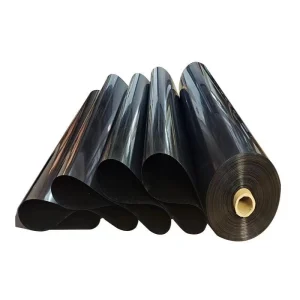

Core Geomembrane Types & Product Matrix
1. HDPE Geomembrane (High-Density Polyethylene)
The industry gold standard for environmental containment, available in Smooth and Textured (single or double-sided) configurations:
-
Key Advantages: Exceptional tensile strength, superior chemical resistance against acids and alkalis, outstanding stress-crack resistance, and robust UV stability for exposed outdoor applications.
-
Primary Uses: Municipal solid waste landfills, hazardous waste containment, mining tailings dams, and petrochemical secondary containment.
2. LLDPE & LDPE Geomembranes
Formulated with linear low-density or low-density polyethylene for projects requiring high flexibility and elongation:
-
Key Advantages: Superior elongation at break (often exceeding 700%), excellent conformability to differential settlement, and ease of welding in tight corners.
-
Primary Uses: Wastewater lagoons, agricultural irrigation canals, fish ponds, and underground tunnel waterproofing.
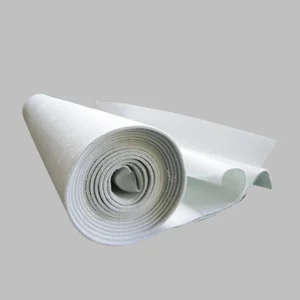
3. Composite Geomembrane (Geotextile-Geomembrane Composite)
A multi-functional geosynthetic combining a nonwoven geotextile (one or both sides) bonded to a core HDPE/PVC geomembrane (e.g., One-Geotextile-One-Membrane or Two-Geotextiles-One-Membrane):
-
Key Advantages: Integrates the high-friction drainage and cushion performance of nonwoven geotextiles with the absolute impermeability of a geomembrane. Reduces installation steps and protects the liner from puncture.
-
Primary Uses: Canal anti-seepage, steep slope containment, reservoir reinforcement, and dam waterproofing.
Technical Specifications & Parameter Guidelines
Boshida manufactures geomembranes in strict accordance with GRI GM13 (HDPE) specifications:
| Technical Parameter | Standard Range / Options | Customization & Compliance |
| Thickness Range | 0.2 mm – 3.0 mm (Common: 1.0mm, 1.5mm, 2.0mm, 2.5mm) | Precision thickness control via automated extrusion lines |
| Material Composition | 97.5% Virgin High-Density Polyethylene + 2.5% Carbon Black | Anti-oxidants & UV stabilizers for 50+ year design life |
| Surface Finish | Smooth, Single-Sided Textured, Double-Sided Textured | Textured surfaces maximize friction on steep slopes |
| Roll Dimensions | Width: 4.0 m – 8.0 m; Length: 50 m – 150 m per roll | Optimized for hot-wedge dual-track welding on site |
| Compliance Standards | GRI GM13, ASTM D6693, ASTM D1004, ISO 9001 | Third-party lab test reports (SGS/Intertek) provided |
Key Applications Across Industries
-
Landfill & Waste Containment (Landfill Geomembranes): Forms the primary bottom liner and final cap barrier in municipal and industrial landfills, preventing leachate from contaminating local aquifers and soil.
-
Mining & Mineral Processing: Lines heap leach pads, gold/copper extraction solution ponds, and tailing storage facilities to prevent toxic chemical seepage.
-
Water Conservation & Agriculture: Waterproofs irrigation canals, agricultural water reservoirs, artificial lakes, and aquaculture fish/shrimp ponds.
-
Energy & Biogas Containment: Provides gas-tight anaerobic digester covers, biogas collection ponds, and solar evaporation pond linings.
-
Tunnel & Underground Waterproofing: Prevents groundwater infiltration in subway tunnels, underground basements, and foundation pit protection.
Why Choose Boshida Geomembranes?
-
Virgin Raw Materials Only: We never use recycled scrap plastics in our primary barrier liners, ensuring 100% stress-crack resistance and long-term durability.
-
Advanced Extrusion Technology: Our state-of-the-art flat-die extrusion and blown-film lines guarantee uniform thickness, high tear strength, and flawless welding seams.
-
Complete System Integration: Pair our geomembranes with Boshida’s nonwoven geotextiles for cushion protection and Bentonite Waterproof Blankets (GCL) for multi-barrier secondary defense systems.
Planning a landfill, pond, or industrial containment project? Contact Boshida’s engineering team today for free product samples, GRI compliance datasheets, and factory-direct wholesale pricing!
Frequently Asked Questions About Geomembranes
Q1: What is the difference between smooth and textured HDPE geomembranes?
A: Smooth HDPE geomembranes offer high fluid sliding resistance and are ideal for flat pond bottoms and easy installation. Textured HDPE geomembranes feature a structured, rough surface that significantly increases the friction angle between the liner and adjacent soil or geotextile layers, making them essential for steep slope landfill sides and reservoir embankments to prevent sliding.
Q2: How do you weld geomembrane liners during installation?
A: Geomembranes are typically installed using professional dual-track hot-wedge welders for long field seams (creating an airtight test channel between two weld tracks) and handheld extrusion welders for detail work, pipe boots, and patch repairs.
Q3: What is the expected lifespan of Boshida HDPE geomembranes?
A: When properly installed and covered (protected from direct UV exposure beneath soil or geotextile layers), our high-density polyethylene geomembranes engineered with 2.5% carbon black have a design life exceeding 50 years.
Q4: What is your MOQ and how are rolls shipped internationally?
A: Our standard MOQ for geomembranes is 3,000 to 5,000 square meters per specification. Rolls are tightly wound on heavy-duty core pipes, wrapped in protective woven geotextile bags, and loaded efficiently into 20GP or 40HQ containers for global export.